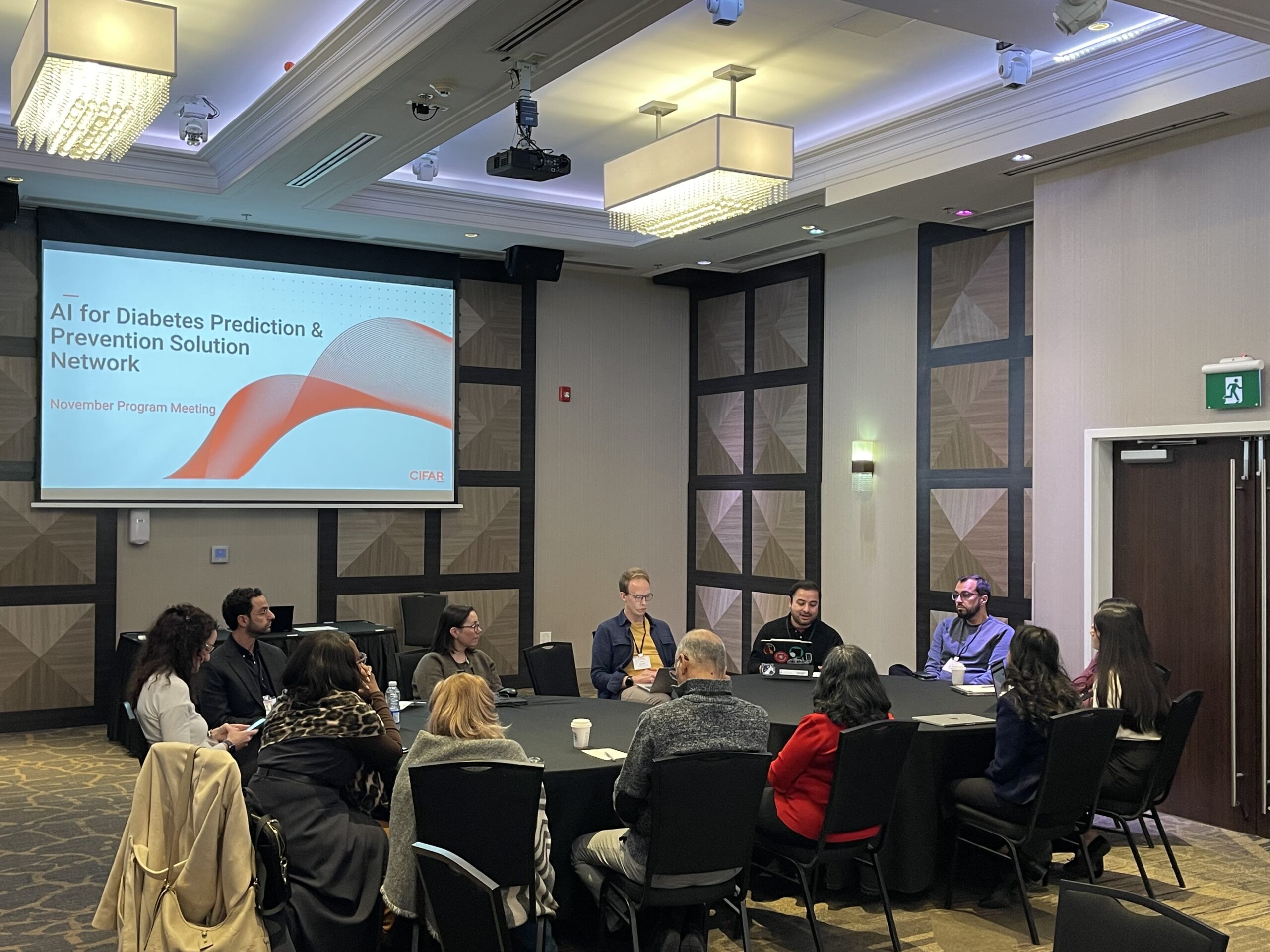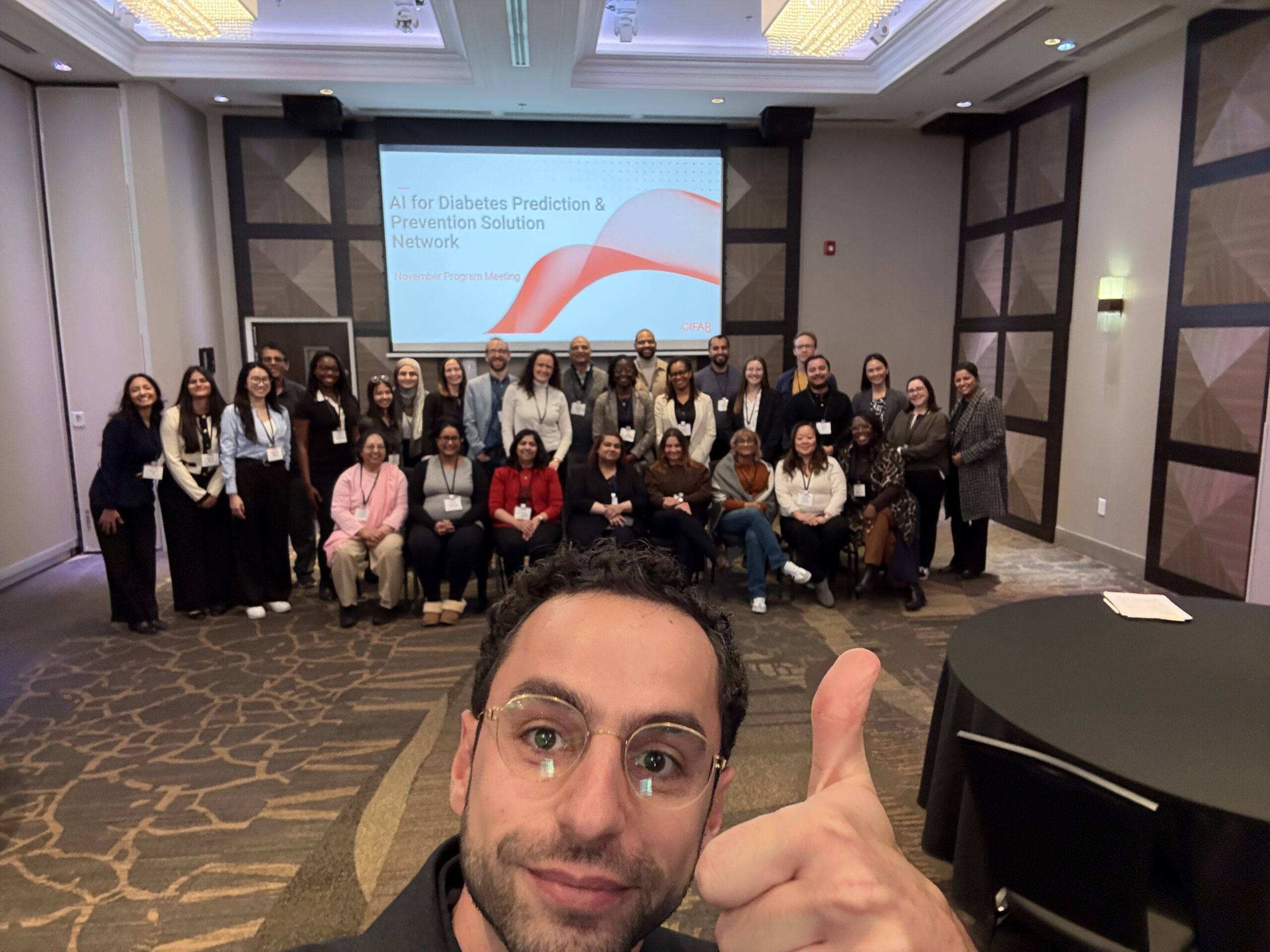
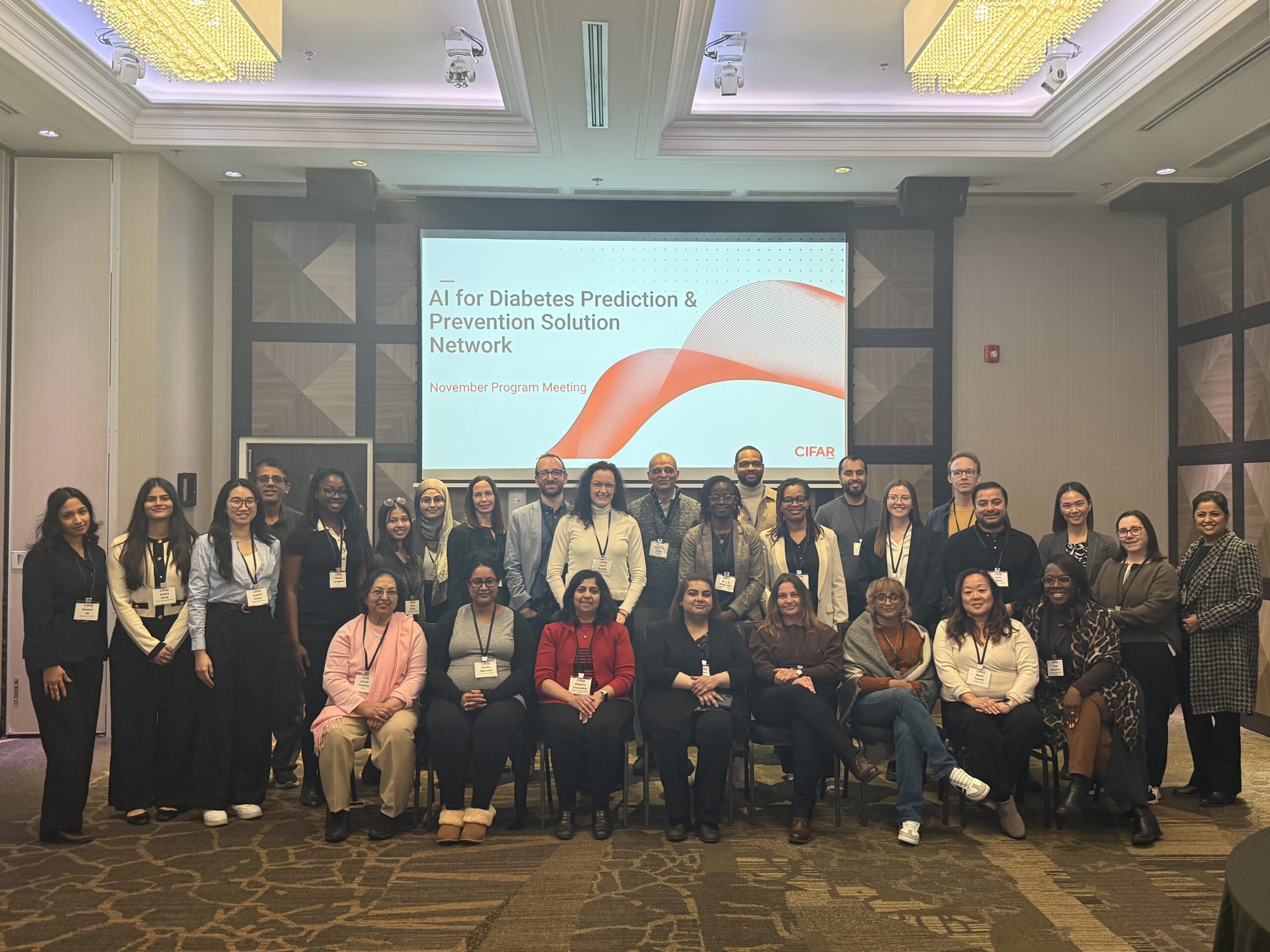
CIFAR’s AI for Diabetes Prediction & Prevention (AI4DPP) Solution Network, co-directed by Laura Rosella, is collaborating with community members and partners in Peel Region to co-develop a framework for the better deployment of current and future AI tools and methods meant to address diabetes. In November 2025, the team held its fourth meeting in Mississauga which was well attended by participants from a range of backgrounds, including people with lived and living experience, policy makers, health care providers, and those who traverse multiple roles.
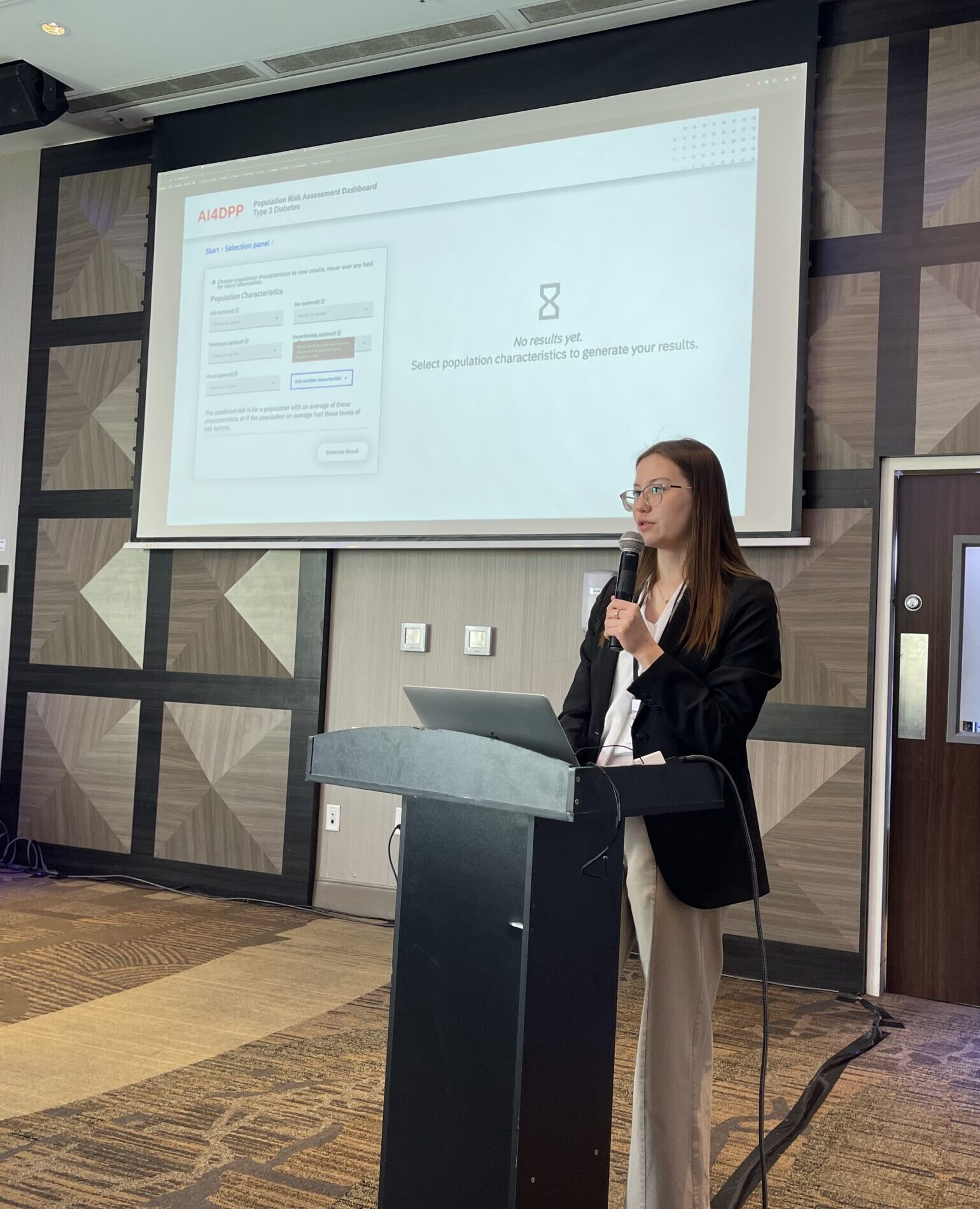
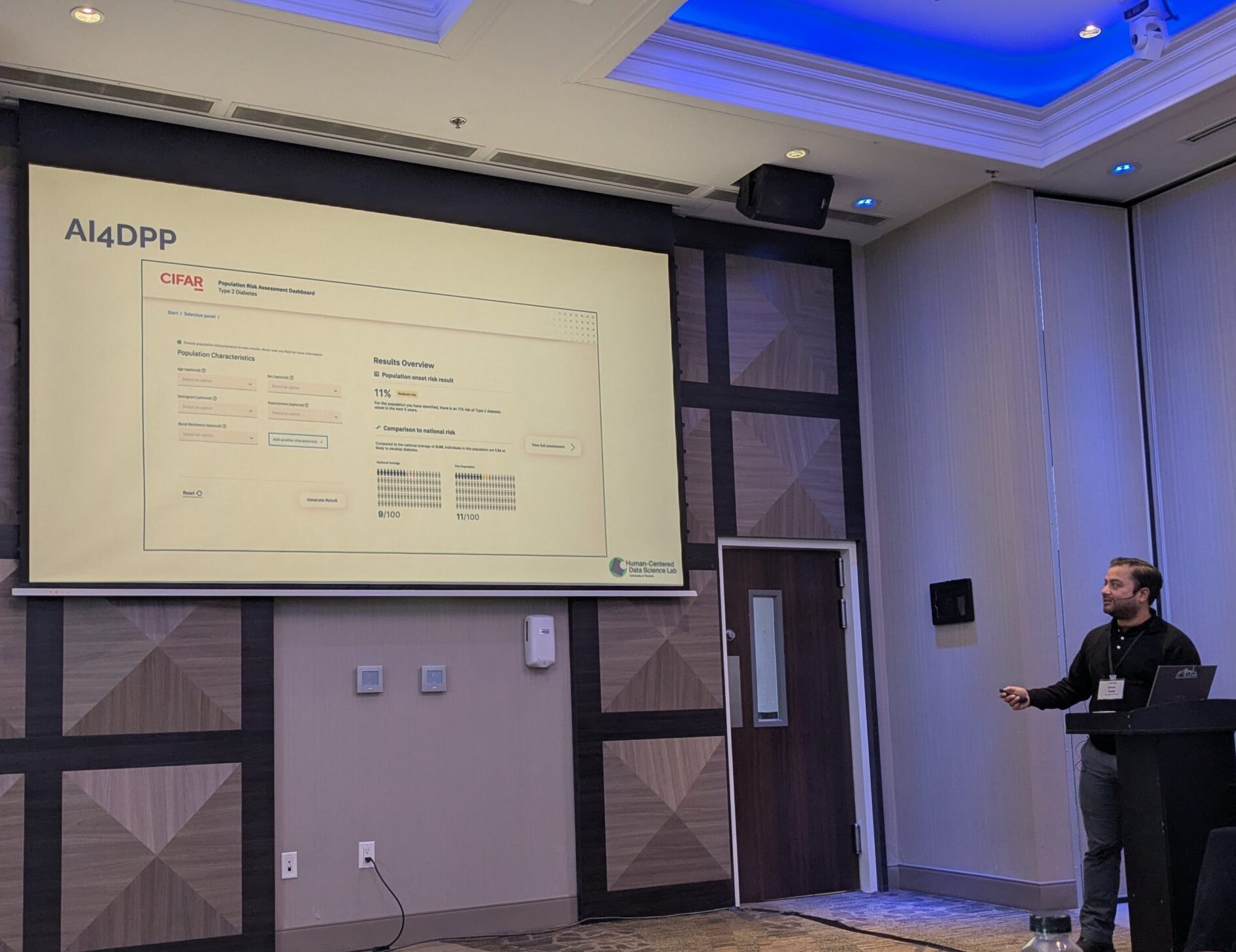
Following Dr. Shion Guha’s overview of AI and risk prediction in health systems, we reviewed the dashboard co-design process over the past two years, and provided a high-level overview of the current iteration presented as an interactive prototype. Members participated in a workshop where they explored all aspects of the dashboard independently and in small groups, responding to a series of questions and prompts to provide feedback at each stage. We held two parallel breakout group discussions for those more interested in a policy focus and a community focus, with a rich discussion about dashboard elements that would enhance the usability and potential impact. The meeting concluded with a full group discussion to summarize feedback and outline next steps.
Some of the standout themes already emerging from the feedback on the dashboard include:
- The potential for such a tool to identify those neighborhoods at highest risk of T2D onset
- The potential for such a tool to engage with local community initiatives (Councillors, community leaders, local programs), so policy makers and end users are aware of local contacts
- The need to include other characteristics such as refugee status or non-permanent residence as Peel Region has a large proportion of such individuals that are currently not represented in health system data
- The need for statistical metrics and information about the predictive model to provide users with confidence in the prediction model, as well as understand limitations and potential biases
The team is analyzing the rich feedback provided by participants and is excited to reflect on impactful changes to the AI diabetes risk prediction and prevention models.